The 5 Biggest Mistakes People Make When Studying for the GED (And How to Avoid Them)
GoTutorGo · September 30, 2026 · 4 min read
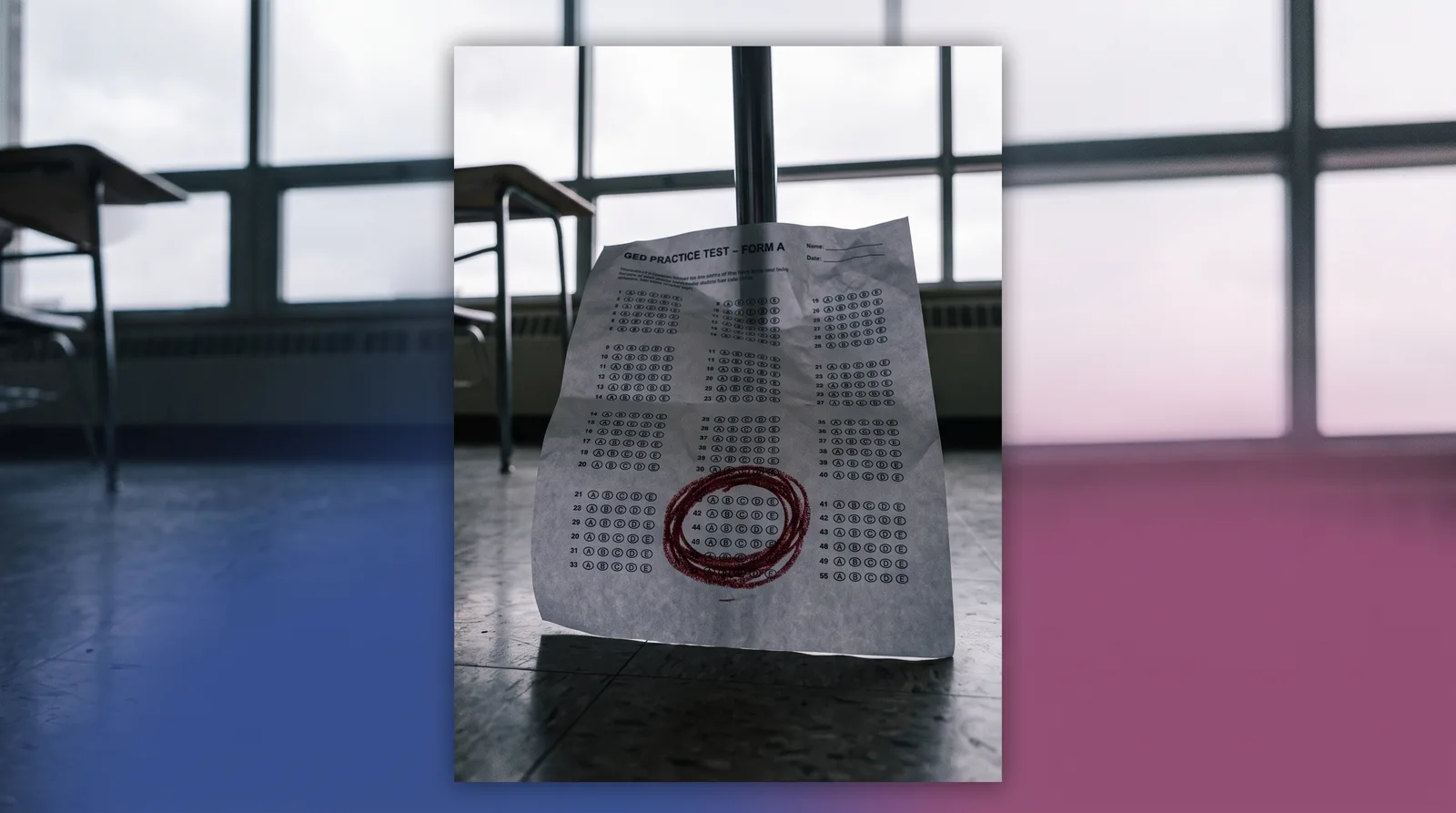
Most people who don't pass the GED the first time aren't lacking ability. They're repeating a handful of study habits that quietly work against them. I've seen the same patterns come up again and again, and the good news is every single one of them is fixable — once you know what to look for.
Here are the five biggest mistakes, and the concrete adjustments that make the difference.
Mistake #1: Studying All Four Subjects at Once, Right From the Start
It feels logical to cover everything evenly. In practice, it scatters your energy and slows your progress on every subject. When you're building a skill from scratch — say, algebraic reasoning or reading extended passages — you need focused repetition, not a rotating schedule of four different things.
The fix: Start with a diagnostic. The official GED Ready® practice test (available at ged.com) gives you a score and a readiness indicator for each subject. Use those results to identify your two weakest subjects and spend your first four to six weeks there. Strengthen your foundation before you spread out. A rising score in one subject builds confidence that carries into the others.
Mistake #2: Rereading Notes Instead of Practicing With Real Questions
Rereading feels productive. It's comfortable, it's familiar, and it creates a sense of recognition — but recognition is not the same as recall. On test day, you won't be asked to recognize information. You'll be asked to retrieve it, apply it, and reason through it under a time limit.
The fix: Flip the ratio. For every 20 minutes you spend reviewing a concept, spend at least 20 minutes answering practice questions on that concept. The discomfort of struggling through a question you're not sure about is exactly what builds durable memory. Get it wrong, understand why, and you're far less likely to miss it again.
Mistake #3: Ignoring the Extended Response (And the Short Answer on Science)
The GED Mathematical Reasoning, Social Studies, and Science tests are mostly multiple choice, so many people focus almost entirely on that format. But the Extended Response in the Reasoning Through Language Arts section — a 45-minute written argument — carries significant weight, and the Science short-answer items can trip up test-takers who've never practiced writing under pressure.
The fix: Write. Out loud and on paper. Take a position on a prompt, structure it with a clear claim, at least two pieces of evidence pulled from the provided source text, and a closing thought. Time yourself. Then read it back and ask: Did I support my claim with the text, or did I just share my opinion? The GED rubric rewards evidence-based reasoning, not personal belief. Practice that distinction before you sit down for the real thing.
Mistake #4: Cramming Math Formulas Without Understanding What They Do
The GED provides a formula sheet during the Mathematical Reasoning test. This surprises a lot of people — and then lulls them into a false sense of security. Having the formula in front of you does not tell you which formula to reach for, when to use it, or what to do with the answer once you get it.
The fix: For every formula on that reference sheet, work through at least three different word problems that use it. Don't just plug in numbers — narrate what you're doing out loud. "I'm using the area formula here because the question is asking how much carpet to buy, not the length of the wall." That kind of reasoning is what the test actually measures. The formula sheet is a tool, not a crutch.
Mistake #5: Treating a Low Practice Score as a Reason to Stop
A discouraging practice score can feel like evidence that you're not ready — or worse, that you can't do this. But a low score on a practice test is literally the most useful data you can generate. It tells you, specifically, where your time should go next.
The fix: After any practice test, sort your wrong answers into categories. On Mathematical Reasoning, that might mean "missed these because of fractions" versus "missed these because I misread the question." On Science, it might be "life science" versus "physical science." Then you know exactly what to study next — and that specificity is far more valuable than putting in unfocused hours. Progress on the GED is almost always nonlinear. A rough score today doesn't predict your score on test day.
Preparing for the GED is a skill like any other — it responds to the right kind of practice, not just more time spent. Avoid these five traps, and you'll spend less time spinning your wheels and more time actually moving toward that credential.
If you want structured guidance through all four subjects — from diagnostic to passing score — that's exactly what GED Ready Academy is built to do.