How to Start Studying for the GED When You Don't Know Where to Begin
GoTutorGo · September 30, 2026 · 4 min read
The hardest part of earning your GED isn't passing the test. It's starting. You open a browser, search "how to study for the GED," and suddenly you're drowning in subject lists, practice tests, YouTube videos, and conflicting advice. You close the tab. Nothing happens.
If that sounds familiar, this post is for you. I'm going to walk you through a beginner roadmap — phase by phase — so that by the time you finish reading, you know exactly what to do today, this week, and this month.
First, Understand What You're Actually Dealing With
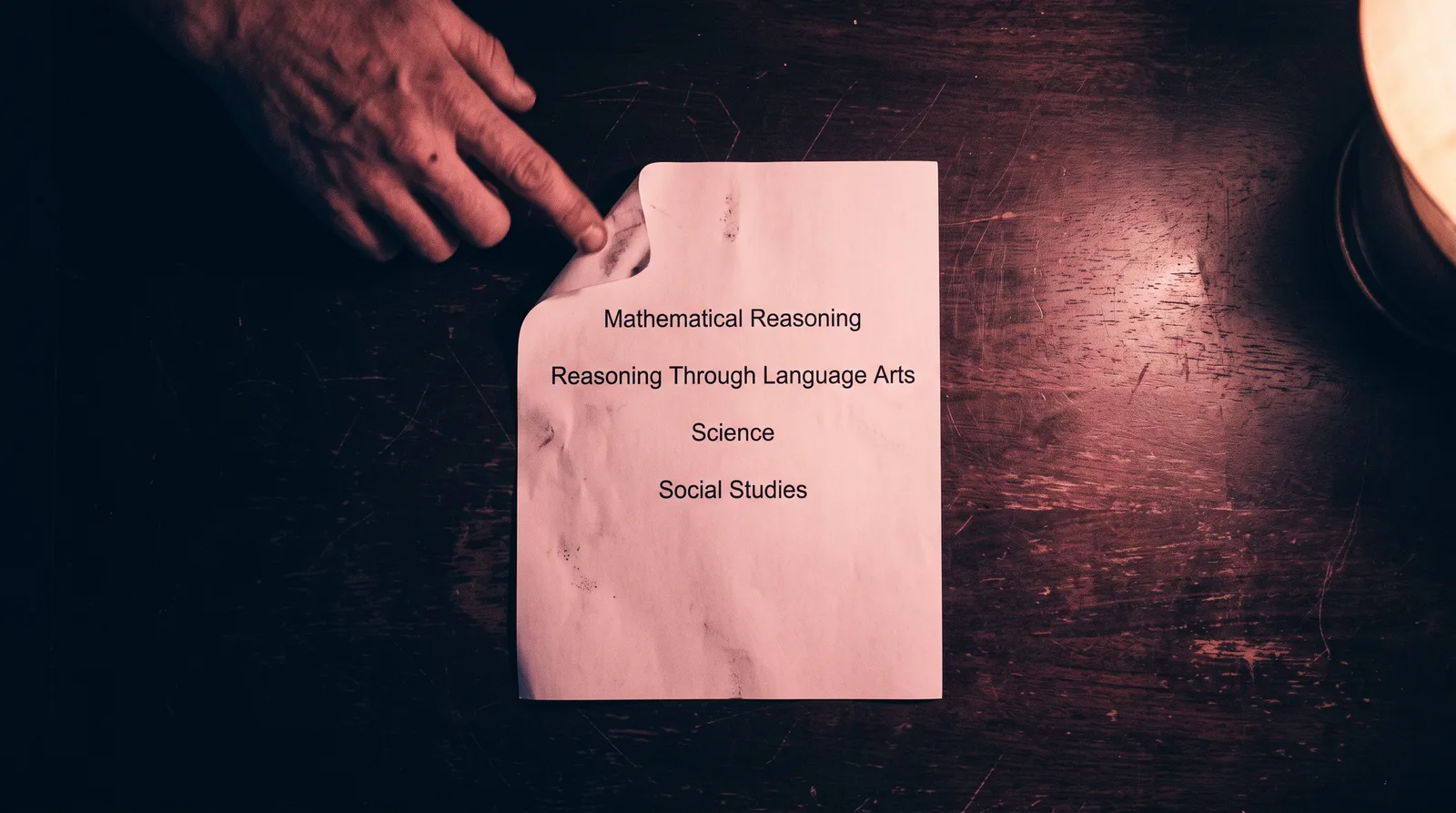
The GED is four separate tests, and you don't have to take them all at once:
- Mathematical Reasoning — algebra, geometry, basic data and statistics
- Reasoning Through Language Arts (RLA) — reading comprehension, grammar, and one extended written response
- Social Studies — U.S. history, civics, economics, and geography
- Science — life science, physical science, and earth science
Each subject is scored on a scale of 100–200. You need at least 145 on each subject to pass. A score of 165+ on any subject earns you "GED College Ready" status, which some employers and colleges specifically look for.
Here's the liberating truth: because they're separate tests, you can pass one subject, celebrate, and come back for the next. You don't have to conquer all four in one sitting.
Phase 1 — Take a Diagnostic Before You Study Anything
Before you open a single textbook, take a free practice test. GED.com offers the GED Ready practice test for about $6 per subject — it's the official predictor and the most accurate signal of where you actually stand. Free sample questions are also available on their site at no cost.
Don't worry about bombing it. That's the point. Your diagnostic score tells you two things:
- Which subjects need the most attention (start there)
- Which skills within each subject are gaps (those become your study targets)
Without a diagnostic, you'll waste weeks reviewing things you already know. With one, every study hour has a job.
Phase 2 — Build a Simple Weekly Schedule
You don't need four hours a day. You need consistency. Even five focused hours a week will move you forward — that's one hour on five different days, or a longer session broken across fewer days.
Here's a beginner-friendly weekly structure to model:
- Days 1 & 2: Work on your weakest subject (the one your diagnostic flagged)
- Day 3: Review one specific skill you got wrong in your last practice session
- Day 4: Switch to your strongest subject to build confidence and momentum
- Day 5: Take a timed mini-practice quiz on anything you've covered that week
The goal of a schedule isn't perfection — it's reducing the daily decision of what to study. When you sit down and already know the answer to that question, you actually sit down.
Phase 3 — Study One Subject at a Time (Mostly)
Multitasking four subjects simultaneously is a fast track to confusion. For your first four to six weeks, go deep on one subject — ideally the one your diagnostic says is closest to passing. Getting your first passing score, even on your easiest subject, does something important: it proves to you that this is possible.
A practical sequence that works well for many beginners:
- RLA first — reading and writing skills reinforce every other subject
- Math second — it has the steepest learning curve, so steady daily practice beats cramming
- Science and Social Studies third and fourth — these are reading-heavy and benefit from the RLA foundation you've already built
This isn't a rigid rule. Let your diagnostic guide you. But having an intentional order removes the daily mental debate.
Phase 4 — Practice Tests Are the Real Lesson
Content review teaches you concepts. Practice tests teach you how the GED thinks. The GED doesn't just ask you to recall facts — it asks you to reason through evidence, interpret charts, and apply ideas to new situations.
After each practice test, don't just check your score. For every wrong answer, ask:
- What did I misunderstand?
- Was it the content or the question format that tripped me up?
- What's the one thing I need to review because of this?
That post-test review session is often worth more than the test itself.
The One Thing to Do Today
Don't wait until you feel "ready." Go to GED.com, create a free account, and look at the free sample questions for one subject — whichever one feels least intimidating. Just that. Ten minutes.
Momentum doesn't come before you start. It comes from starting.
If you want a more structured path through all four subjects — with lessons, explanations, and real practice tests built in — that's exactly what my GED Ready Academy is designed for. But even before you join any course, taking that first diagnostic step on your own will put you further ahead than another week of planning.
You've already read this far. That counts.